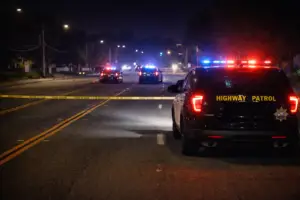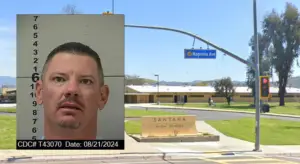
EL CAJON, CA — The civil lawsuit arising from the death of 11-year-old Arabella McCormack has now been resolved through settlement. Public reporting confirms that the City of San Diego, the County of San Diego, Pacific Coast Academy (PCA), and Rock Church collectively agreed to pay approximately $31.5 million to resolve claims brought on behalf of Arabella’s surviving sisters, with PCA contributing $8.5 million of that total.
The Settlement Closes the Case — But Not the Questions
Settlement is not an admission of liability. It is not a judicial finding. It is a negotiated resolution of civil exposure. But settlements of this magnitude do not occur in a vacuum. They arise from risk, from evidence exchanged, and from the recognition that a jury could find liability.
In the course of reporting for this article, counsel for the McCormack sisters clarified that Pacific Coast Academy was able to produce proof that the required mandated reporter training under AB 1432 and Education Code §44691 had in fact been provided, and that the teachers assigned to the home had completed that training. The plaintiffs’ theory was not failure to train. It was statutory failure to report suspected abuse despite training.
That clarification narrows one issue — and exposes a more serious one.
If training occurred, and reporting still did not occur, then the failure was not administrative. It was operational. And that raises a fundamental question about oversight.
The Authorizing District: Dehesa’s Statutory Role
Pacific Coast Academy does not operate independently of public oversight. It is a charter school authorized by Dehesa Elementary School District. Under California law, charter schools function under the umbrella of their authorizing district, which retains specific statutory responsibilities for monitoring compliance with applicable law.
Education Code §47604.32(a)(1) provides that the authorizing agency “shall monitor the charter school and ensure compliance with all applicable laws.” That obligation includes compliance with health and safety laws, including the Child Abuse and Neglect Reporting Act (CANRA) and mandated reporter training requirements under AB 1432 and Education Code §44691.
In other words, while Pacific Coast Academy operates its own instructional program, it does so under Dehesa’s authorization. The district collects oversight fees for that role. With that fee comes a statutory duty: monitoring and ensuring compliance.
The plaintiffs’ attorney has clarified that PCA was able to produce documentation showing mandated reporter training occurred. That resolves one compliance question. It does not eliminate the authorizer’s broader responsibility to evaluate whether compliance systems function effectively in practice.
If a charter can demonstrate that training certificates exist, and yet reporting fails in catastrophic fashion, the inquiry does not end at the charter level. It extends to what the authorizer reviews, how it evaluates risk in non-classroom-based settings, and whether oversight extends beyond verifying paperwork.
Dehesa serves fewer than 500 students directly on its physical campus, yet it authorizes charter schools enrolling more than 13,000 students across multiple counties, the majority of them in non-classroom-based or virtual models. That structural scale raises legitimate questions about how monitoring capacity is defined, staffed, and executed.
The statute requires monitoring. It does not define what level of staffing, review, auditing, or supervision constitutes meaningful oversight in a portfolio of that size.
When oversight is measured primarily by documentation rather than by functional outcomes, compliance can appear intact even when intervention fails.
The Facts That Training Did Not Prevent
On the day emergency responders arrived, Arabella weighed 40 pounds at eleven years old. She had no pulse. She was not breathing. Her skeletal structure was visible beneath her skin. She had bruises, ulcerations, cuts, and scabs. X-rays revealed thirteen fractures. Her younger sisters were so severely malnourished that they developed refeeding syndrome, a condition associated with prolonged starvation.
According to the civil complaint, PCA homeschool teachers entered that home approximately every twenty days between 2019 and 2022. The complaint alleged that the signs of abuse were severe and should have been apparent.
The teachers involved had completed mandated reporter training.
The abuse was not reported.
That is not a paperwork failure.
That is a breakdown between training and action.
And it is precisely here that the question of “meaningful oversight” becomes unavoidable.
What California Law Actually Requires
Under Education Code §47604.32, a charter authorizer is responsible for monitoring the charter school and ensuring compliance with all applicable laws. That includes compliance with CANRA and mandated reporter training requirements under AB 1432 and §44691.
The statute requires monitoring. It requires ensuring compliance. It does not define “meaningful oversight” in operational terms.
What does monitoring actually entail?
Is it limited to verifying that a certificate of training exists in a personnel file?
Or does it extend to evaluating whether reporting systems function in practice?
If a charter can demonstrate that training occurred, does that exhaust the authorizer’s oversight responsibility — even if reporting fails in catastrophic fashion?
The statute is clear about duty. It is less clear about depth.
And that ambiguity matters when the consequences are life and death.
The Ratio Problem: 500 Students vs. 13,000
Dehesa Elementary School District serves fewer than 500 students directly on its physical campus, even when accounting for students affiliated with on-site charter programs. Yet it authorizes charter schools enrolling more than 13,000 students across multiple counties, the majority of which operate in non-classroom-based or virtual formats across multiple counties.
This ratio is not a rhetorical flourish. It is structural.
A district that directly educates fewer than 500 students is exercising statutory oversight authority over a charter population more than twenty-six times larger than its own enrollment base.
Oversight requires personnel. It requires auditing. It requires site review. It requires compliance verification. It requires follow-up. Dehesa’s staffing levels are calibrated to its physical campus enrollment. The district does not maintain a separate, dedicated charter oversight division; existing personnel serve both the district’s in-person student body and its significantly larger charter portfolio.
The law permits small districts to authorize large charters. The harder question is whether scale dilutes scrutiny — and whether that dilution carries consequences measured not in paperwork deficiencies, but in child safety.
Does such a large charter school scale impact what “meaningful oversight” looks like in practice?
When an authorizer’s charter portfolio vastly exceeds its in-district student population, does that affect:
The depth of compliance review?
The frequency of performance audits?
The qualitative evaluation of instructional practices?
The verification of mandated reporting culture?
The ability to detect red flags in non-classroom-based settings?
The statute assumes monitoring capacity. It does not define how capacity should scale with enrollment.
If Training Existed, What Was Being Monitored?
The attorney for the McCormack sisters was clear: PCA produced proof of mandated reporter training. That issue was not the basis of the settlement. The allegation was failure to report despite training.
That clarification eliminates one compliance concern. It does not eliminate oversight questions.
If a charter can demonstrate that a teacher completed required training, the authorizer has satisfied one compliance checkpoint. But meaningful oversight cannot logically end there.
Training completion is a binary metric. Reporting culture is not. Oversight that measures compliance only by documentation risks mistaking formal adherence for functional protection.
Non-classroom-based charter models place teachers inside private homes, often as the only institutional eyes on the child. That structural model increases, not decreases, the importance of evaluating how reporting obligations are understood and implemented.
Does meaningful oversight include reviewing whether mandated reporter training is reinforced? Whether teachers receive guidance on escalation? Whether administrators audit patterns of reporting? Whether complaints are tracked? Whether supervisory review exists for homeschool visits?
Or is oversight satisfied once a certificate is uploaded?
If oversight is limited to documentary verification of training completion, then this case reveals the limit of that model.
Training existed.
Reporting did not.
Public Entity Immunity and the Absence of the District
Dehesa was not named as a defendant in the civil suit. Plaintiffs’ counsel indicated that bringing the district into the case would have raised public entity immunities that were not available to PCA.
Litigation strategy explains the absence.
It does not answer the policy question.
Public entity immunity protects districts from certain forms of liability. It does not negate statutory oversight responsibilities under §47604.32.
The absence of Dehesa from the caption of the case does not equate to absence of oversight duty.
The District’s Silence
A detailed request for comment was sent to Dehesa Superintendent Bradley Johnson, asking specific questions regarding the district’s oversight framework, verification procedures, and any policy changes implemented following the litigation.
No response was received.
Silence is not proof of wrongdoing. But silence in the face of specific, statute-based questions about oversight practices does little to reassure the public that those practices are robust.
But when a district oversees more than 13,000 charter students and one of those charters pays $8.5 million to settle a case involving the death of a child enrolled in its program, the public is entitled to understand how oversight is defined, implemented, and audited.
The statute requires monitoring.
The public deserves to know what that monitoring looks like.
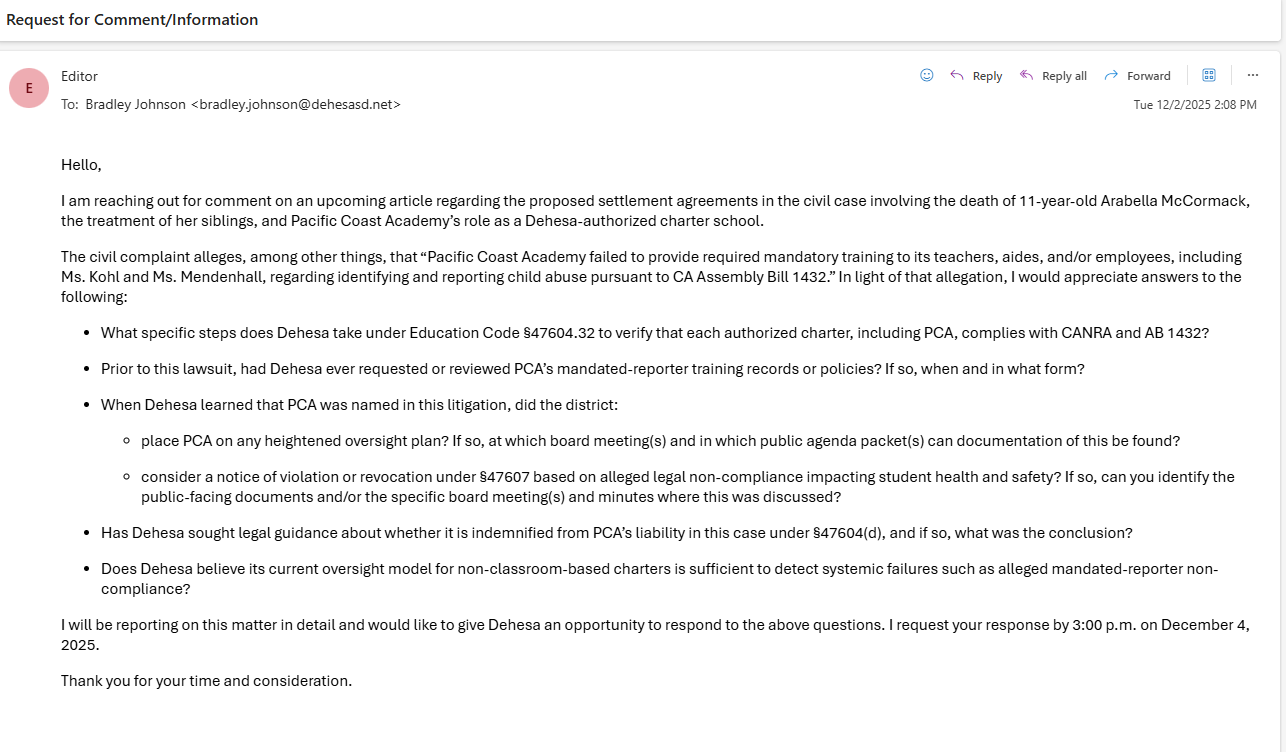 Screenshot of a December 2, 2025 email sent to Dehesa Superintendent Bradley Johnson requesting comment on charter oversight, mandated reporter training compliance, and the Pacific Coast Academy settlement. No response was received prior to publication.
Email authentication records confirm the request for comment was successfully sent from Eastof52.com and passed all domain authentication checks (SPF, DKIM, and DMARC). No bounce-back or rejection notice was received.
The System Still Needs Repair
Lawmakers in Sacramento have acknowledged these gaps. Bills like AB 84 and SB 414 attempted to:
Strengthen authorizer oversight structures,
Tie oversight fees to documented activities,
Create clearer accountability mechanisms,
Increase scrutiny of non-classroom-based charter schools.
Both bills recognized that authorizer capacity, documentation of oversight activity, and transparency around compliance review are not abstract concerns. They are structural safeguards. When those safeguards remain undefined or unenforced, “meaningful oversight” risks becoming a phrase rather than a practice.
Yet those efforts stalled or were vetoed.
In the face of a child’s death and glaring statutory ambiguity, lawmakers now have the opportunity — and arguably the obligation — to revisit these reforms and make them enforceable, not discretionary.
The Core Question
The settlement resolves civil exposure.
It does not resolve whether California’s charter oversight framework — particularly in non-classroom-based models — is structurally equipped to translate mandated reporter training into mandated reporter action.
If training can exist alongside catastrophic non-reporting, then oversight must be measured by more than training certificates.
If a district of fewer than 500 in-district students can oversee more than 13,000 charter students, then capacity and scale must be examined in concrete terms.
“Meaningful oversight” cannot be a phrase invoked only when convenient. It must be defined, operationalized, and documented.
Because when training exists and reporting does not, the question is no longer whether the law was technically followed.
The question is whether the system functioned.
In this case, a child died. Two others survived only after extreme medical intervention. The civil case has concluded. The statutory questions have not. Until “meaningful oversight” is defined not merely as the existence of training certificates, but as the functional ability to detect and interrupt harm, the system remains vulnerable to the same failure.
If California’s oversight system does not evolve to require documented, functional accountability — not just paperwork — then the question is not only whether the law was followed but whether it was sufficient. Arabella’s story should demand more than compliance; it should demand protection.
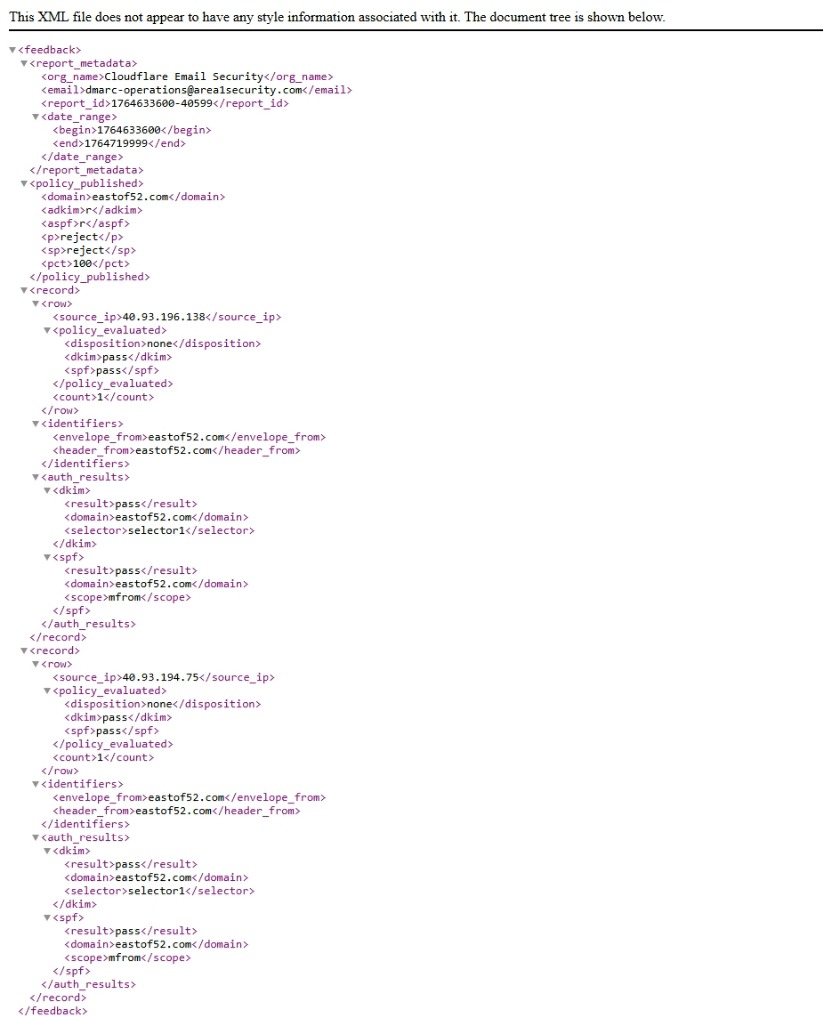 Screenshot of a Cloudflare Email Security (Area 1) DMARC aggregate report confirming that an email sent from eastof52.com passed SPF and DKIM authentication checks and was not rejected for spoofing.