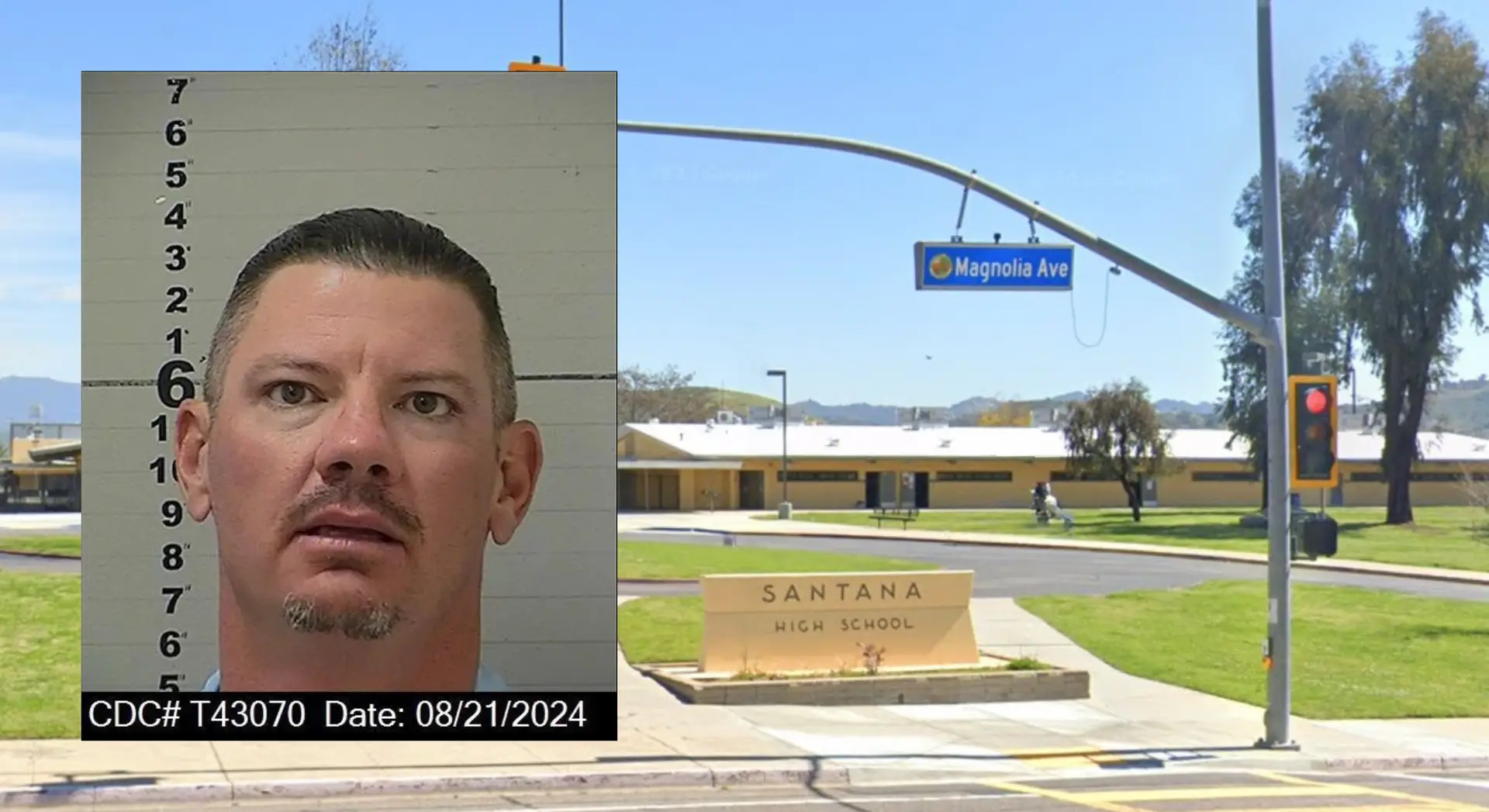
SANTEE, CA — A San Diego Superior Court judge has recalled the 50-years-to-life sentence imposed on Charles Andrew “Andy” Williams, the 15-year-old who carried out the March 5, 2001 shooting at Santana High School that killed two students and wounded more than a dozen others. The ruling means the matter is being transferred to juvenile court, a move prosecutors say could result in Williams being released from state prison pending a new disposition.
Williams pleaded guilty in 2002 to the attack, which killed Bryan Zuckor (14) and Randy Gordon (17) and injured additional students and staff. He is now 39 and has been incarcerated for more than two decades; he became eligible for parole in 2024 but was denied release by the state parole board, according to reporting cited by City News Service and the Associated Press.
The legal fight: is “50-to-life” the functional equivalent of juvenile LWOP?
At the center of this week’s hearing was a question that keeps showing up in California courts: whether a long-to-life sentence imposed on a juvenile—even if it technically includes the possibility of parole—should be treated like life without parole for purposes of a recall-and-resentencing statute.
California Penal Code § 1170(d)(1)(A) states that when someone was under 18 at the time of the offense and was sentenced to life without the possibility of parole, and has been incarcerated for at least 15 years, that person may petition the sentencing court for recall and resentencing.
Prosecutors argued Williams doesn’t qualify because he was not sentenced to LWOP—he was sentenced to 50-to-life. Deputy District Attorney Nicole Roth told the court that the original sentencing judge chose 50-to-life specifically so Williams would have “some possibility of parole,” rather than a sentence that would keep him imprisoned for “centuries.”
Defense attorney Laura Sheppard, however, argued that appellate courts have treated 50-to-life for a 15-year-old as the “functional equivalent” of LWOP—because a parole date so far in the future can be meaningless as a practical matter. Judge Lisa Rodriguez agreed, citing appellate rulings and concluding there was “no rational basis” to provide a statutory pathway to recall for juvenile LWOP while denying the same pathway to similarly situated youth with de facto LWOP-length sentences.
What happens next: juvenile court, possible release, and an appeal
Because Williams was 15 at the time of the shooting, the judge’s ruling sends the case back into the juvenile system. The San Diego County District Attorney’s Office says it will challenge the decision in the Court of Appeal and, if necessary, seek review in the California Supreme Court.
If the matter remains in juvenile court, prosecutors say Williams’ adult convictions would be redesignated as juvenile “true findings,” and he could be released from prison with no further custody and up to two years of juvenile probation—a consequence that the DA’s office described as a public-safety and victims-rights concern.
A status conference in juvenile court is expected next month, where a new resentencing/disposition hearing date may be set.
Why juvenile court now? SB 1391 and the 14/15-year-old transfer ban
This transfer back to juvenile court isn’t happening in a vacuum—it sits on top of years of California juvenile-justice reform. In O.G. v. Superior Court, the California Supreme Court described how Senate Bill 1391 (2018) amended Proposition 57 to prohibit minors under 16 from being transferred to adult criminal court. The court upheld SB 1391 as a permissible amendment to Prop. 57.
That matters here because Williams was 15 at the time of the shooting. The procedural posture—adult sentence recalled, case routed to juvenile court—collides with the modern legal framework that strongly limits under-16 adult prosecution.
Victims, survivors, and the split-screen reality of “rehabilitation” vs. “irreparable harm”
In public statements after the ruling, District Attorney Summer Stephan said her office “respectfully disagree[s]” with the decision and will continue fighting it on appeal, arguing the original 50-to-life sentence remains warranted by the “cruel actions” and the lasting trauma inflicted on victims and the community.
Survivors are also watching closely. ABC 10News quoted shooting survivor Tim Estes, who said the victims’ families effectively received life sentences—and questioned why the shooter should get another chance at freedom.
Defense counsel, meanwhile, argued Williams has shown ongoing remorse and rehabilitation, including writing apology letters and participating in programming while incarcerated; NBC 7 reported Williams viewed the hearing remotely and became emotional when the court ruled.
What to watch
Three things now determine where this goes:
The DA’s appeal — whether the recall/eligibility ruling is stayed, narrowed, or reversed.
Juvenile court disposition — if the case proceeds there, what “juvenile probation” looks like for a 39-year-old with a 2001 campus shooting on his record.
Victims’ rights process — participation, notice, and impact statements as the forum shifts.
This story will be updated as filings appear in the Court of Appeal and as the juvenile court calendar is set.